Captcha me!

Last week I was desperately trying to open an account with Google Groups so I could participate in a particular project. All went well until I reached the dreaded captcha. Of course I couldn’t work out the word, so I clicked on the little wheelchair icon to find the supposedly accessible version. But no it wasn’t! To keep out the bots it was as aurally munged as the visual word was. I tried a pair of younger ears to see if age was a barrier, but he couldn’t hear it either. But at least he could read it so I could get in.

I therefore deduce that Google Groups only want people who can see and hear really really well, or who don’t mind not having independent access to be a part of the action. Shame on you Google!

Leave a Comment

Filed under Web Accessibility

Dyslexia and web accessibility

Last week was Dyslexia week. Shame I couldn’t get this post finished in time for it as there wasn’t much publicity. That is a pity because dyslexia affects a surprising number of people, and it is only now gaining recognition in New Zealand educational circles.

As a web accessibility issue dyslexia has a low profile, although the barriers are recognised and assistive technology is available. However many people in the web community still think that web accessibility is all about blindness and screen readers. Sure blind people face significant and continuing barriers to web site access. But other groups of disabled people do too, and often the barriers are quite different for them than for blind people.

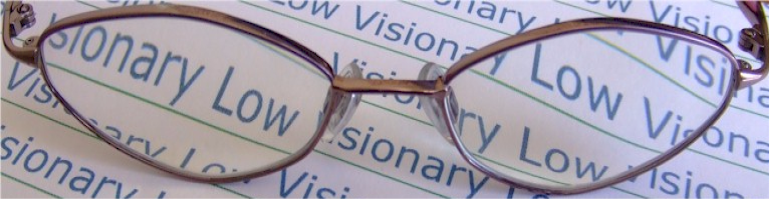
But it is interesting to note that some of the accessibility issues for people with dyslexia are quite similar to those for people with low vision, including me. It seems that quite a lot of the things I hate about web sites are also not enjoyed by people who have dyslexia either.

Many of the problems they, and I, face with web sites revolve around the way information is presented on the screen. Funnily enough the dyslexia week site exhibits the same problems.

I will list just a few.

Unbroken text stretching right across your screen is a pain in the neck. As the eyes try to scan across, it is really difficult to follow on to the next line. If it goes off to the side and you have to scroll across, it makes it even worse! The point of vision gets lost in a morass of text. Text in a relatively narrow column is easier to read.

Right justified text is another pain where the words are spaced out so that both the left and the right sides of each column of text are straight lines. Unjustified text – like the text on this page – leaves a ragged edge down the right hand side.

For a dyslexic reader, justified text, with its uneven spaces between words, creates visual patterns of white space which are hard to ignore. They distract the reader, who loses the place.
Bright text on a white background is another problem for people with dyslexia, (less so for me if the text is strong and black.) Words can appear to move and blur. An off white background may help. Text on a patterned background is really unhelpful and difficult and distracting to read.

Dyslexic readers, like me, find moving images distracting and like the plain uncluttered nature of a type face like arial. We hate italics, and we love print of a decent size.

Like almost everyone else people with dyslexia like plain English – see the new Plain English Power web site.

It just shows that providing good web accessibility does not create barriers for others.
1 Comment

Filed under Information Accessibility, Web Accessibility

Television, disability and freak shows

Where does the time go? I have slipped up rather badly, with pressure of work etc.

The debate on National Radio NZ’s Media watch programme about whether television NZ should play charter programmes at more popular times has set me thinking about disability in the broadcast media, and disability media.

Attitude, the disability programme funded by NZ On Air screens at 9.30 on Sunday mornings when there is no advertising, and few viewers. If it were to screen at a more popular viewing time I shudder to think about what advertising would accompany it. The mind boggles at the thought of New Age crank cures, rest homes, or maybe the public service road safety ads about intersections with an spoke on the wheel reading disability – fate worse than death!

The only other programmes about disability on the box are usually “disease of the month” or thinly disguised freak shows. Even Shortland Street which in the past has starred Philip Patston as a hetero character who happened to be disabled, has blotted its copybook by featuring a mad bad and dangerous mentally ill man as a plot device, and we haven’t seen the resident bloke with Tourette syndrome, can’t remember his name, for a while.

Well now you know I watch Shortland Street! Seriously though, I have pretty much given up on the mainstream media to begin to cover our issues in any meaningful way on a regular basis. Even National Radio’s One in Five doesn’t hit the spot for me these days. It seems to be on an entirely different tack.

Nothing About Us without Us is pretty much lost on the mainstream media. I’m not sure that having so called “minority” NZ On Air funded programmes in more commercial time slots would make any difference. In fact it could be a backwards step with TV MZ possibly attempting to influence content. Keep reading the blogs I say!

1 Comment

Filed under Disability Issues, Media

Celebrations all round

This week is truly celebratory!

It began with the Disability Rights Convention CRPD, continuing with the presentation in New York of the FDR Award to New Zealand.

On Saturday DPA cut a celebratory cake for the Convention, and there are a few other celebrations planned for both events.

It is fitting that yesterday marked the launch of our second National Sign Language week. It was moving to experience the national anthem sung and signed in English and Maori at parliament, along with one of my favourite Hirini Melbourne song The Butterfly. (If someone can post the Maori title please do.) The Deaf community sure can party.

The theme this year is freedom of expression, which of course is a basic human right spelled out in the CRPD. The site has a calendar which is full of great events. Check it out. The butterfly sign logo for the week is a potent symbol of that freedom. It is interesting to note that butterflies are deaf. They negotiate their way through the world by using their antennae.

The butterfly and the Sign for it is the symbol of freedom of expression.

I have a personal celebration as well. We have both our daughters at home as our younger daughter is 21 this week. It’s odd how this quaint celebration custom still exists even though there is no longer any legal significance about reaching this age. You can drink at eighteen, serve in the armed forces at eighteen and vote at eighteen. Most people have the key of the door much younger these days, and may already be burdened with student debt by the age of 21. I guess it is just a good excuse for a party paid for by parents in return for their being allowed to tell embarrassing childhood stories.

Happy Birthday Alice!

3 Comments

Filed under Disability Issues, Disability Rights, Miscellaneous